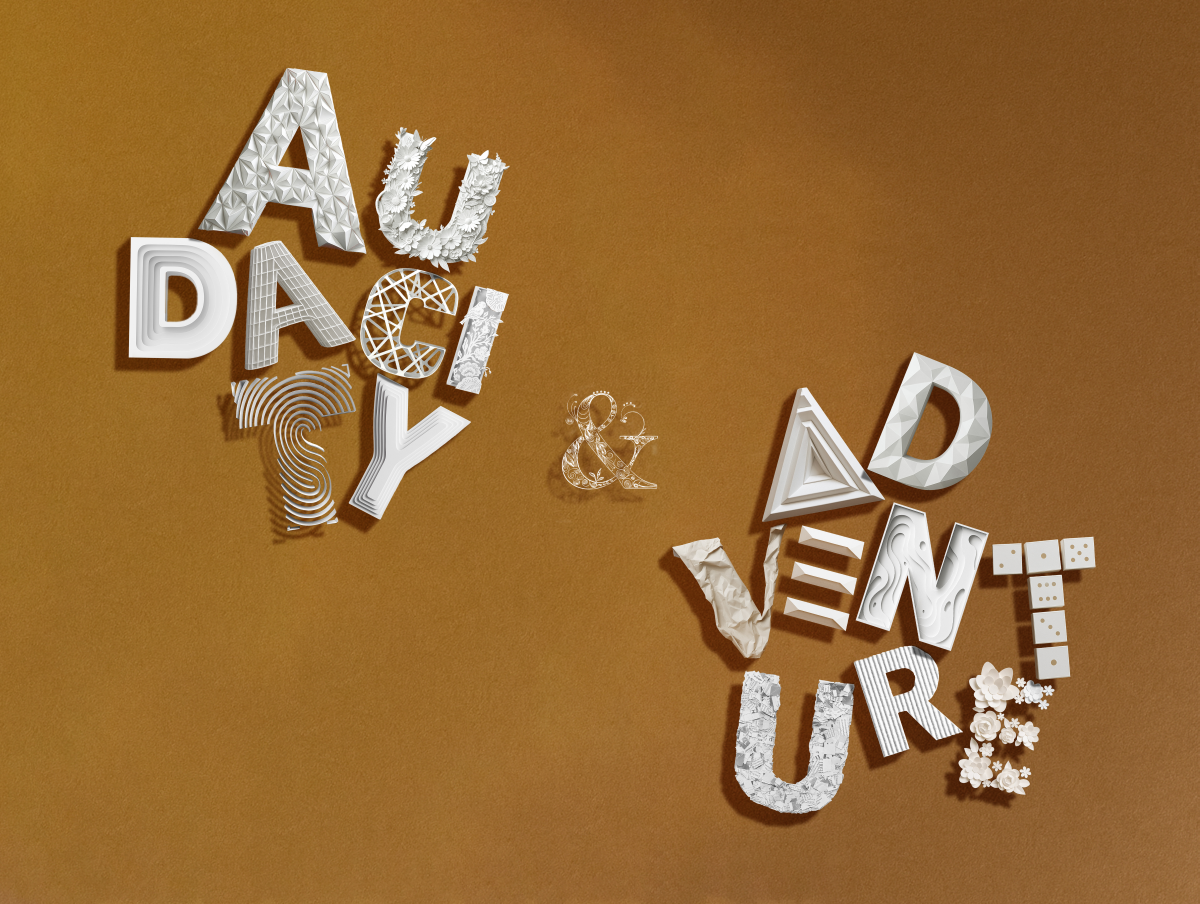
Deciding to be an artist is in itself an act of immense courage. The artist occupies nearly the bottom rung of the utility of professionals as perceived in society, often viewed by non-artists with a mixture of curiosity and condescension. It is common knowledge that it is challenging to make a living as an artist. In this context, the paper art practitioner is a brave person of an altogether different pedigree. While canvas, stone, metal, wood, glass, ceramic and even plastic feel like they have inherent monetary value, paper as a material is perceived to be the most worthless in intrinsic value. Doubts are brought on its longevity, aspersions are cast on its fragility and ease of destructibility.
It then falls on the daring, dexterity and dreams of the paper practitioner to transform this ‘something of nearly no value’ into something of ‘immense value’.
This is the audacity of the paper-shaper, and the India Paper Triennial seeks to be equally audacious in creating a platform in India where these adventures in paper and of the paper artist, designer, crafter, architect and engineer : are all celebrated with aplomb and given the arc-lights that they truly deserve. The founder and many stakeholders of this initiative have had to brave immense odds to build the dirt-track on which they now walk, and they seek to pave that path into a metalled-road, easing the way ‘a bit’ (one aspires) for paper practitioners who will follow.
In this age of AI and Nanotechnology, Micro-chips and Machine Learning, what is the relevance of paper? As we go more and more digital – books and magazines are being reinvented into virtual avatars and book shops are disappearing from streets, going underground or going completely online. We no longer need stamps or send letters or postcards, all communications are emails, Whatsapp messages and social media chats. Even invites are now mostly e-invites. Paper production and printing technologies have improved tremendously, but the face value of paper has fallen to an all time low. E-contracts are stored in digital vaults, E-boarding passes are verified with digi-yatra, payments are made with UPI, and it is only a matter of time before paper money may go out of common circulation. The generations now and in the future will no longer appreciate or value a physical birthday or anniversary card in the way past generations used to.
It is in its smallness, both in perceived value and its commonness of availability: wherein lies paper’s passport to the future. Children will always be encouraged to write and draw on paper for the immense diversity that a piece of paper, paired with a crayon or pencil afford.
Already Scandinavian countries are banning digital smart class screens and all devices from their classrooms and going back to hand written notes and physical books. They are discovering it is the best way ahead to arrest the increasing cognitive decline in the next generation. A paper boat and a paper plane will always be enjoyable to fold. Physical gifts will always be packed with physical paper. Packaging will continue to happen in paper and cardboard. It is in these simple things and in these simple joys, this immediacy without any pretension to grandness – that the future of paper lies.
The simple and tactile then become the portal through which the complex emerges – in the hands of the paper architect and artist – the minute origami model on a table top will become an installation that fills a hall, the humble and diminutive Vaman avatar of Vishnu becoming so enormous as to encompass all of Earth. The small will become big. The ordinary will become extraordinary. An A4 sheet of paper can be as easily an endless roll of paper.
It is in the nature of paper to be humble and thereby hide an immensity within. AI may take away most computer-based desk jobs in the future, but those who built extraordinary worlds with their bare hands, will not only survive, but thrive.
There is now paper that does not get wet or soggy. There is also paper that conducts electricity, on which circuits can be directly drawn with conducting ink. Paper that can be used on facades (like traditional shoji screens in Japan), allowing wind to come through but blocking pollutants and particulate matter, essentially acting like a filter. There is fire-proof paper! It is called ‘nabe’ in Japan! Paper bricks are being used in industrial scale air-conditioning systems, and myriad technical and engineering problems, solved with paper manipulations, now have wide ranging impacts on fields as diverse as nanotech surgery, outer-space solar array deployments and accessibility of pocket microscopes in rural Africa. All these remain achievements in labs and then directly move into industry. The Paper Triennial seeks to create collaborations between artists, architects, engineers and researchers to brings installations that share these audacities of humble paper to a larger audience.
Connect with us on contact@ipt.org.in