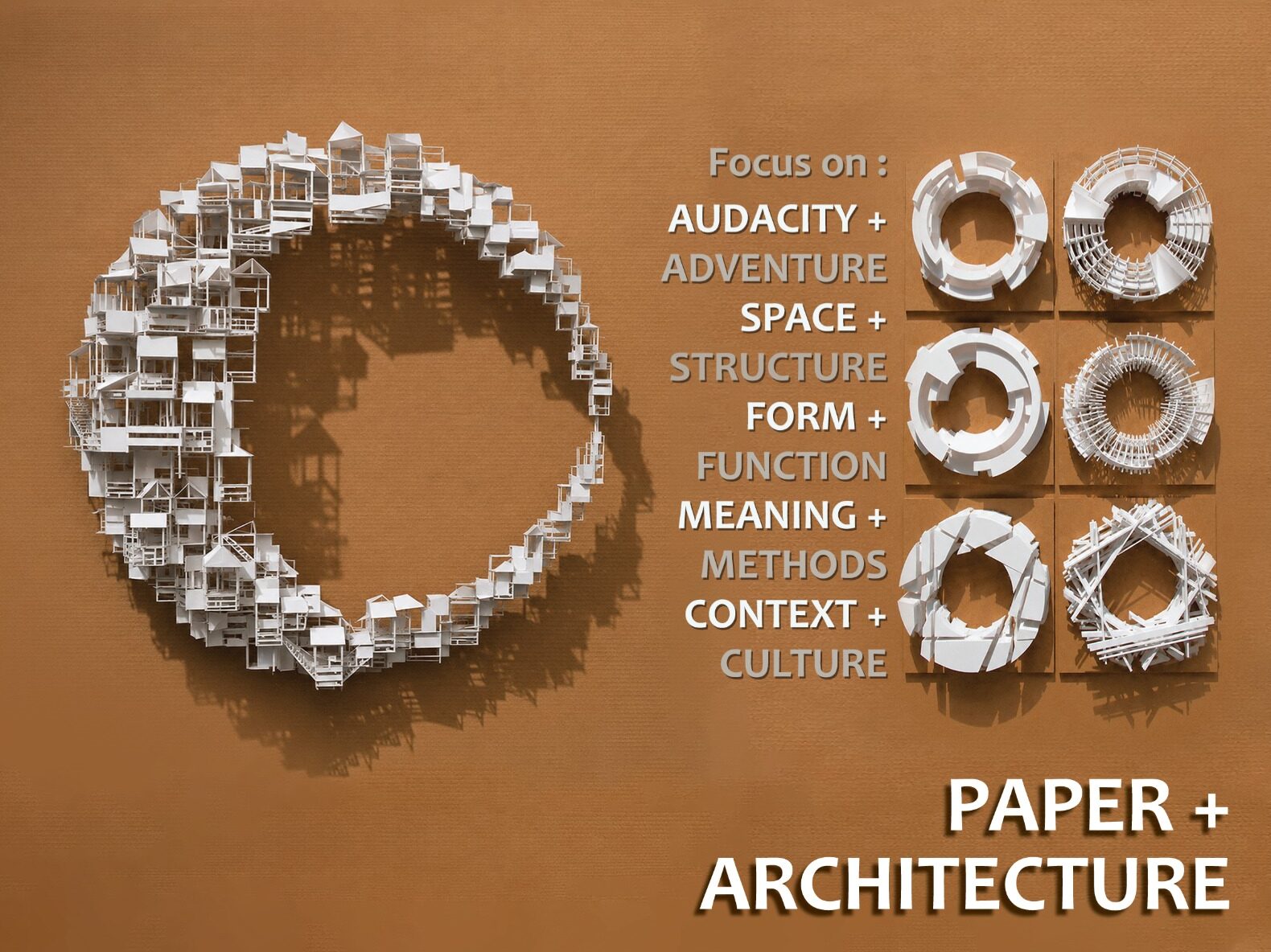
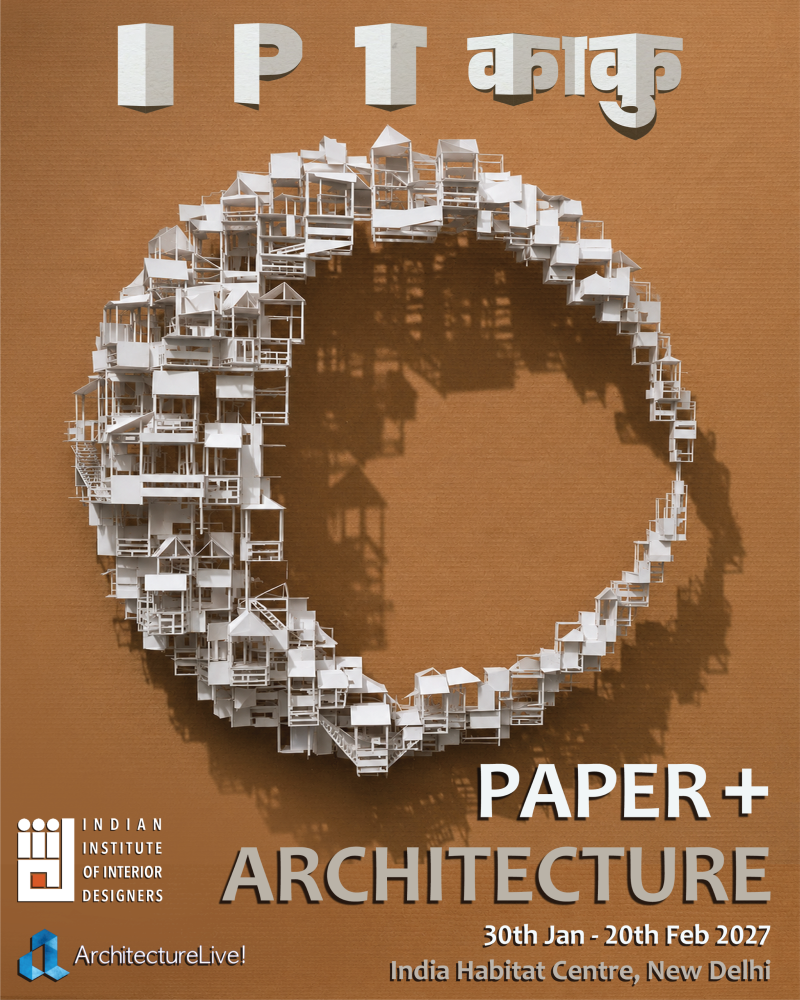
Paper + Architecture is part of the India Paper Triennial, 2027 to be presented at the Visual Arts Gallery, India Habitat Centre, New Delhi, from 30th January to 20th February 2027.
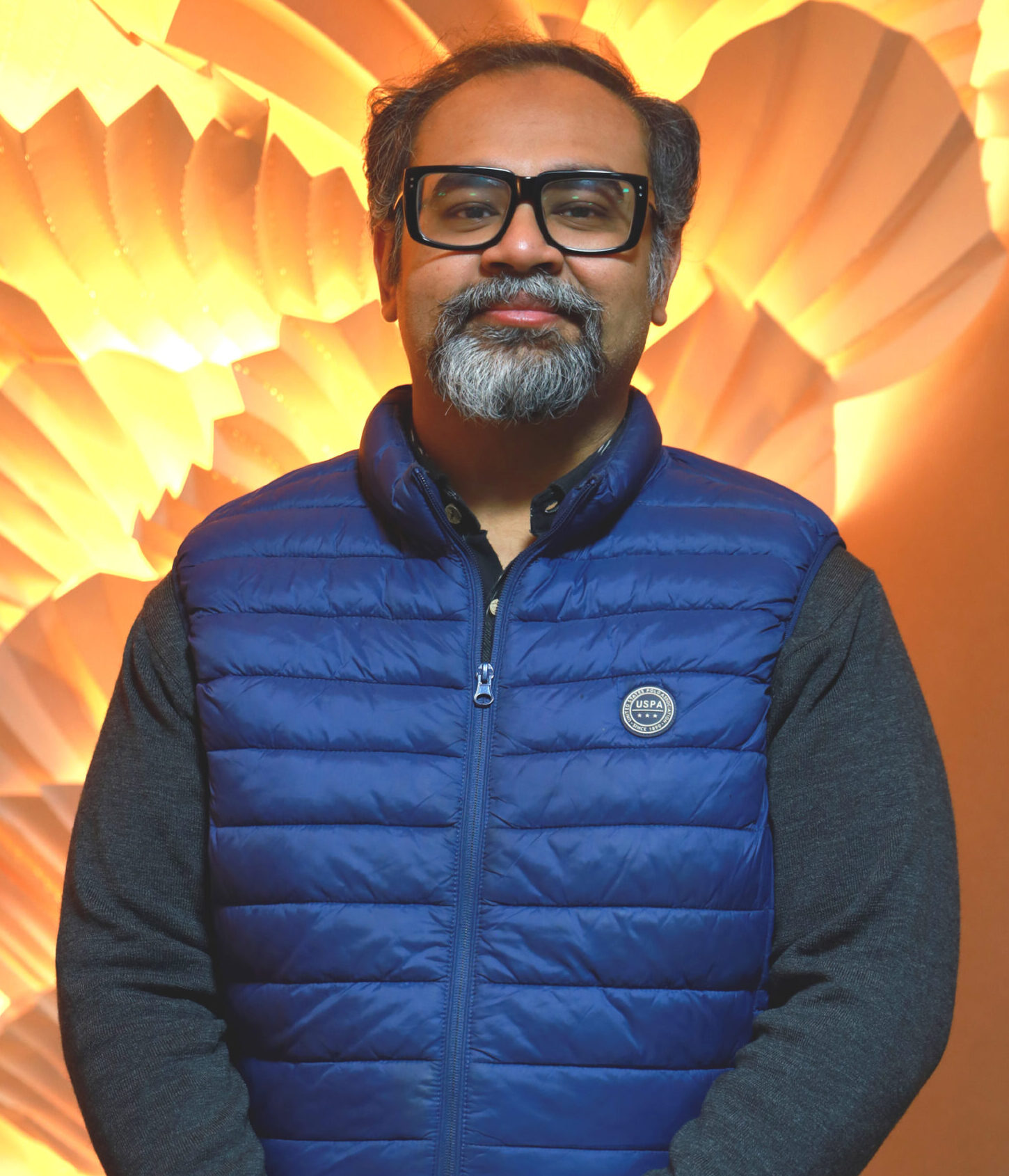
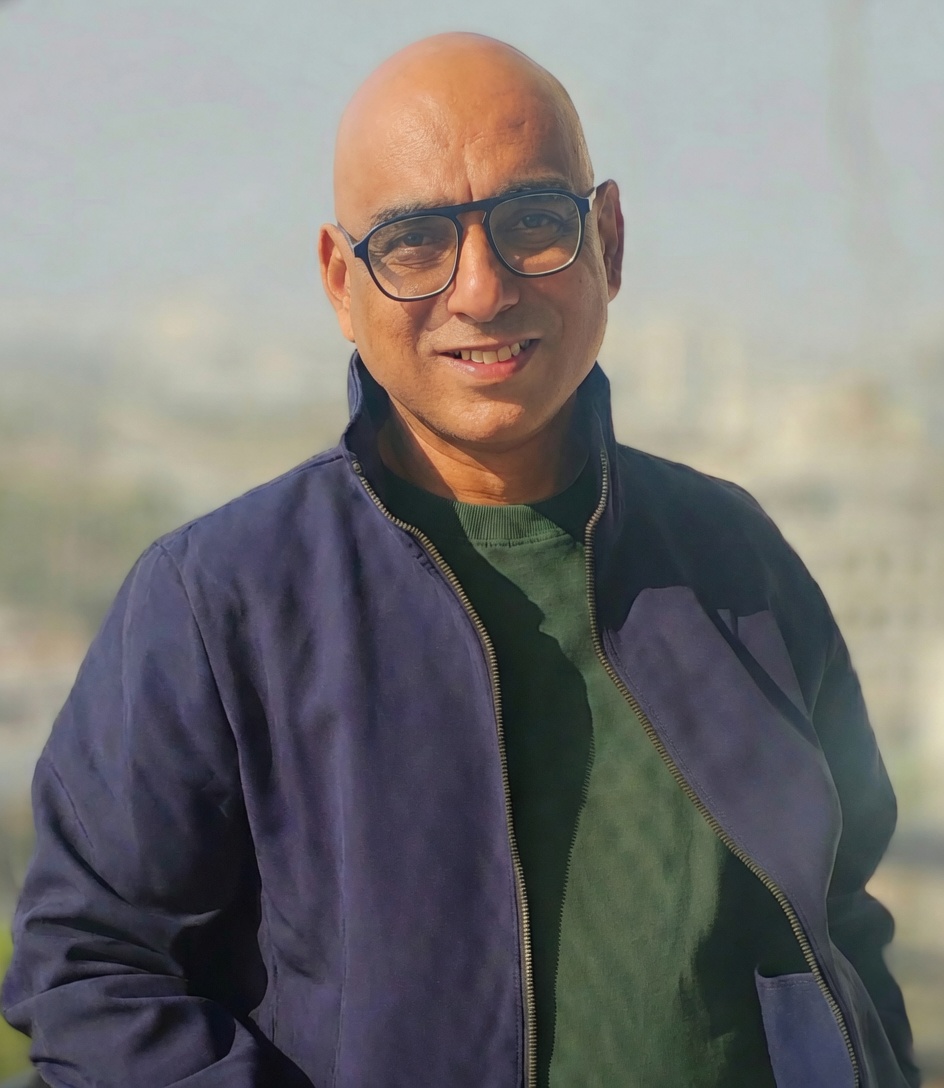
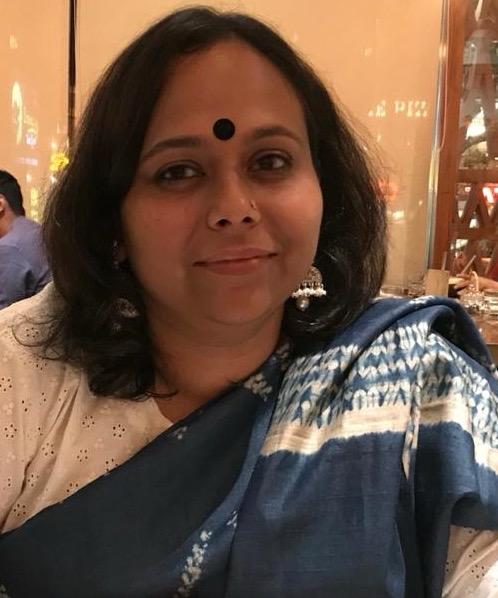
Curated by Rajesh Advani (Founding Editor ArchitectureLive! and Unbuilt Ideas), Ankon Mitra (practicing Architect and Artist, Founding Director of the India Paper Triennial) and Meera Vasudev (practising Architect, Artist and Educator), this exhibition places paper—as both material and metaphor—at the heart of architectural imagination, as paper is where architecture exists – as an inquiry rather than an answer, as proposition rather than product.
‘Paper + Architecture’ is embedded within the India Paper Triennial (Jan 8th to Feb 20th, 2027), www.indiapapertriennial.com a massive first ever celebration of creative use of paper in the country at this scale, spread across multiple venues in Delhi focused on –
There is a perception that paper is a cheap and weak material with little intrinsic value. The overarching theme of the India Paper Triennial is ‘Audacity and Adventure’, the submission must be brave, challenging status quo and the norm. As the theme suggests, the versatility and whimsicality of paper needs to be radically explored and expressed. It must be audacious in its concept and adventurous in the way paper will be used to communicate this. The world is in rapid motion and many pre-conceived ideas are in turmoil. What is the way forward? Mediocrity and status quo are no longer the answer. We seek works exploring Critique (questioning the status quo) and Provocation (visions meant to ignite debate) across these three sub-categories :
We seek to showcase exciting, novel and audacious architectural thinking, AND the audacious and exquisite use of paper as a sculptural medium to communicate it.
1. A maximum of 5 visuals of the proposed idea, A4 sized landscape or portrait, minimum 1200 pixels on the shorter side – one visual per page including, but not limited to –
as may be relevant to visually communicate the concept in a maximum of 5 images. Upload the visual or visuals as individual jpegs or pngs (maximum 1.5MB per visual or image). Images can be hand-drawn, CAD-drawn, AI-generated or virtually created on any device, photographs of working paper models, but must clearly convey the 3-Dimensional or 2.5-Dimensional aspect of the final project output. There should be some visual clarity of the proposed scale and size of the final output – whether it will be a free-standing space or installation, mounted on a wall, hung from the ceiling or to be placed on a pedestal. The images submitted if selected will have to be transformed by you into a physical artefact in paper!
Important Note: The Exhibition venue has a 13’-6” clear height up to the false ceiling.
2. An A4 portrait oriented single document in .pdf format containing the following information –
In the age of AI, the ubiquity of AI platforms have made virtual image-making affordable and abundant – walkthroughs can be created in half an hour, sparkling visuals can be generated in under a minute with a series of good prompts. Paper + Architecture seeks to re-establish the primacy of the physical realm – of the effort, time and creativity that is needed to translate something that has been imagined in the mind into a physical reality. The actual making of architecture continues to be challenging, painstaking, time-consuming. The making of a paper model or maquette is clearly a dying art with the advent of digital, virtual, AI supported and 3D-printed expressions. We seek to challenge this decline and redirect thinking as to why a model is more than a model — they are not only final polished artifacts for presentation to a client, they are tools to connect the intelligence of hands with that of the mind – we invite proposals where the making process itself strongly informs the idea. The simplicity and ubiquity of paper sometimes belies its immense value to the development of human creativity and imagination.
Select projects from this exhibition have the possibility to be selected for inclusion in the upcoming publication Unbuilt 3.0. ; ArchitectureLive! and Rajesh Advani have pioneered the conversation around the potential of Unbuilt Ideas through the two seminal publications Unbuilt 1.0 and 2.0 ; Version 3.0 is now in the works. Know more about Unbuilt Ideas here : https://unbuiltideas.com/
A detailed FAQs document accompanies this Brief which will answer all the queries pertaining to participation. The Submission Form should be filled before the last date of submission.
We look forward to your Stage 1 submission by August 20th, 2026.
For more queries, feel free to connect with us at curators@ipt.org.in;
Rajesh Advani | Ankon Mitra | Meera Vasudev
Curators
Paper + Architecture
Some architects and architecture studios will be invited to pitch ideas, based on the avant garde or unconventional nature of their practice. However, any creative professional interested in architecture can apply via the open call. Possible participants would be young or mid-career architects, urban designers, landscape architects, conservation architects, interior or space designers, product and furniture designers, city or traffic planners, artists and sculptors who work on architectural concepts and themes, academics interested in habitat and ecology related issues, institutions and colleges teaching architecture, urban design/planning and/or any other design programs. There must be proficiency and skill in creating 3-dimensional objects with paper. Students participation is not permitted in this particular exhibition. A separate open call will be made for the Students’ Edition of the India Paper Triennial.
Individual or team participation are both welcome. If it is a team, the presence of an individual or professional with an established proficiency and skill in working with paper is desirable. There is no restriction on team size. The works presented in this national level exhibition of ‘Paper + Architecture’ would need to be of a very high quality both conceptually and in in execution.
There are three curators of this project of varying age and experience. They have their networks and decades of understanding, relationships in their own specialized art spheres. A strong motive behind the curation is a careful selection of ideology and methodology. We are interested in speculations and provocations and how paper can bring radical ideas to life.
Who you choose to collaborate with in the initial stage 1 submission is up to you. However, if your partner leaves the process midway or you part ways, whoever registered as the Primary member or ‘Team Leader’ is expected to complete the submission in Stage 2.
Submitted concept of Stage 1 can be tweaked or modified in Stage 2 if selected. Complete change of concept is not permitted.
This exhibition is not organized primarily for the purpose of selling works. However, since it is a part of the larger India Paper Triennial where art, sculpture, design, craft are also being exhibited, if you’d like your work to be available for sale, please create your work in a way that it is saleable and also let us know the sale price which we are happy to display alongside the description of the work and a QR Code to reach you directly.
If you participate as an individual or professional, the work and its IPR belongs to you. If you create it as a team, you must have an agreement regarding ownership of the work amongst yourselves. India Paper Triennial is not involved in this process; ownership is entirely an internal agreement among the participants. Physical ownership of the work post the exhibition is also up to the team members to decide amongst themselves.
India Paper Triennial has the right in perpetuity to use the images, concept text, photos and videos of your project for promoting India Paper Triennial and its exhibitions in the present or future without entertaining any claims of compensation from the participant.
India Paper Triennial has no commercial interest in the proceeds of this exhibition. We wish to push architectural and creative practices through the
medium of paper. Architects or artists who work with galleries are free to consign their work created for this exhibition to their gallery and should request their gallery to send patrons to the exhibition to see their work. This will also benefit emerging architects/creative practitioners in the show who currently don’t have visibility or gallery representation, and also help the galleries scout new talent.
No. There is no participation fee and this entire special project is a not-for-profit initiative. The curators are also working completely pro-bono without charging any curation fee.
There is no cash prize. However, this is a great opportunity for young professionals and practices to showcase their ideas and skills alongside established voices. The exhibition will be visited by a galaxy of leaders from across the creative industries. All participants will be awarded certificates by India Paper Triennial.
Packing, transport and return transport of the work to the Visual Arts Gallery at India Habitat Centre, New Delhi are the responsibility of the participants. Professional or team are requested to be present and actively participate in the installation of their work. Please send an assistant / junior architect from your studio if team leader cannot be present. We will make an exception to this for outstation participants. They may send the works and we will install/uninstall pack. They have to take care of shipping costs and insurance both ways. Detailed discussion on installation requirements will be entered into with drawings to be provided by the outstation participants who cannot be physically present during the install. Owing to the non-profit nature of the exhibition, architects from outside Delhi-NCR have to take care of their return travel and stay in Delhi at their own expense, in case they decide to come. Further details will be shared at the right time.
False walls, pedestals as necessary, labels, hooks in ceiling, grid frames for hanging etc., will be arranged by India Paper Triennial. Any special install requirements will be discussed with participants in advance and they will be requested to plan for it themselves in case if it is complex or difficult for IPT. If the idea is audacious / adventurous, we will try our best to support!
Show opens on the 29th of January informally to the participants, formally to all visitors on the 30th of January and closes on the 20th of February. Final details about the exact sequence and programming around the opening will be taken in October / November, all the participants will be informed, so they have 2-3 months to plan their travel / visit, well in advance.
Installation : 27th and 28th January 2027
Uninstall : 20th February evening 2027
This exhibition PAPER + ARCHITECTURE is a part of a much larger series of events and exhibitions around the India Paper Triennial / Kaagaz Kumbh being organized at Bikaner House, Travancore Palace, Crafts Museum, India Habitat Centre, IGNCA and the Grand Hotel, with multiple openings, programs, immersions and projects being showcased across the disciplines of art, design, craft, technology and architecture. An estimated 4,00,000 art lovers are expected to witness this unprecedented celebration of Paper in India for the first time, over multiple venues and over 45 days, starting 8th January and ending on the 20th of February. International participants to various events are flying in from all over the world to take part in an International Paper Congress in Udaipur, and they will also visit the exhibitions in Delhi before heading to Udaipur 10th to 14th February. This is a valuable opportunity to immerse, connect and network.
There are endless possibilities but a few are listed below –
And more…
This is the India Paper Triennial, the most visible and main material should be paper. Other materials like plastic, metal, wood etc., can play a secondary, supporting or structural role and are not be prominently visible in the works created.
Will the work be on a wall, hanging from the ceiling, a free-standing sculpture on the floor or on a pedestal, or something like a space one walks into, or perhaps a combination of the above? These are all primary questions of scale that each participant must address. Once they propose a certain scale or size, and are selected in Stage 1, it will be a discussion with the curators, where to place the work, how much space to allocate it, how one work thematically flows into the next work etc. These are all aspects of detailed exhibition design. The clear height of the exhibition venue is 13’-6” or 4115mm.
The proposed work should conceptually investigate paper as an architectural medium and address the theme of ‘Audacity and Adventure’. Submissions may explore design thinking, spatial exploration, architectural storytelling, process documentation, material experimentation or the reconstruction of architectural elements using paper. The work may be presented as paper models, installations, artist books, pop-ups, dioramas or full-scale paper constructions that highlight the creative and analytical role of paper in architecture. Sketches and process diagrams can act as secondary supporting materials but flat paper prints/drawing representations must be kept to a minimum. Please refer to the concept note document and exhibition brief for a detailed understanding.
Yes, you can. You may apply for other open calls when they become live. You can stay connected with India Paper Triennial (Instagram : https://www.instagram.com/indiapapertriennial) or subscribe to receive updates via your email by registering on the website www.indiapapertriennial.com.
Yes. If you are interested in being considered for any of the other sections of the India Paper Triennial, you are welcome to submit your CV and portfolio to indiapapertriennial@gmail.com. Please mention the name of the section you wish to be considered for in the subject line of your email so that your submission can be forwarded to the appropriate curatorial team.
The respective curators will review your portfolio and assess its suitability for their section. Please note that several sections of the India Paper Triennial are curated through an invitation-based process. While all submissions will be given due consideration, sending your portfolio is an expression of interest and does not guarantee selection or participation.
(i) | Open call is announced / Select practices are invited to pitch ideas | 24-07-2026 |
(ii) | Open call closes / Stage 1 Submission closes | 23-08-2026 |
(iii) | Stage 1 – (a) Evaluation and Selection of submissions received. (b) One to one interaction between shortlisted participants and curators to fine tune their proposals. | 23-08-2026 – |
(iv) | Stage 1 selections are announced | 23-09-2026 |
(v) | Stage 2 – Submissions, more details of the projects including final sizes and technical aspects of the installation. | 22-09-2026 – |
(vi) | Stage 2 – Final list of participants is announced | 26-10-2026 |
(vii) | Work Completion Deadline – Submission of all Data pertaining to the works via Google Form including final pictures and videos for social media promotion purposes and for an e-catalogue. | 07-12-2026 |
(viii) | Transport of works (for outstation artists not travelling to Delhi for the show or the opening) | 15-01-2027 |
(xi) | Installation of works | 27-01-2027 & |
(x) | Soft opening of the Exhibition for Participants | 29-01-2027 |
(xi) | Formal Opening of the Exhibition | 30-01-2027 |
(xii) | Uninstall and Packing | 20-02-2027 (Evening) |
Note: This registration is required to create your account. The submission form will be available on your dashboard once you log in.
Click here to login to your Dashboard
Ankon Mitra is an architect, landscape designer and sculptor. He has built an international reputation as a pioneer of the folding technique. Recipient of the All-India Gold Medal for Sculpture in 2018 and the Lexus Design Award for Craft Design in 2020, his work has been exhibited in 18 countries. His sculptures and installations are part of public and private collections globally. With his brainchild – ‘Oritecture = Origami + Architecture’, he shares a vision of a universe forming and dissolving from acts of folding. Oritecture emerged out of a close observation of the natural world as a result of immersion in his landscape architecture practice. His most recent projects in India are a 5 storeys commemorative installation for the Tata Sons at Bombay House as a tribute to Ratan Tata and a 20 metre tall lighting installation in acrylic and metal at the new arrival terminal at T2 Airport, Ahmedabad for Adani Airports. In 2025 he was selected as anchor artist for the Cheongju Craft Biennale in South Korea and in 2024 in the Indian Ocean Craft Triennial in Perth, Australia, two of the most prestigious craft celebrations in the world. He has presented an Origami Pavilion at the Salone del Mobile in Milan in April 2026.
Rajesh Advani is an architect and the founding editor of ArchitectureLive! and Unbuilt Ideas—two influential digital platforms dedicated to advancing critical discourse in architecture and urbanism. Since their inception, Rajesh has shifted the focus of these portals from mere project repositories to spaces for rigorous inquiry, treating architecture not just as an image or spectacle, but as a cultural, political, and ethical act. He further challenges the status quo of architectural publishing by reimagining firm monographs—traditionally characterised by one-sided narratives—as frameworks for critical enquiry and professional reflection.
Through ArchitectureLive!, Rajesh has spearheaded a movement toward ‘voice populi’ in the profession, inviting opinion pieces and critiques that challenge institutional norms and narratives.
As the curator of Unbuilt Ideas, Rajesh explores the profound value of unrealised architectural works, providing a platform for conceptual ideas that push the boundaries of imagination. His work with the ‘Unbuilt Architecture’ series fosters vital conversations on how the built environment could be conceived differently to address challenges like climate change and social inequity.
An advocate for inclusivity and gender parity, Rajesh’s efforts have initiated a new discourse around long-ignored issues in the architecture profession in India. His advocacy has raised awareness and sparked meaningful dialogue, challenging traditional norms and paving the way for a more inclusive and equitable professional landscape.
Through his online platforms, research, and advocacy work, Rajesh Advani continues to bridge the gap between the profession and the public. He remains committed to the belief that rigorous discourse and knowledge-sharing are fundamental to reshaping how our cities and environments are imagined and inhabited on a global scale.
Meera Vasudev is a Bangalore based architect-academic and ceramicist. Her interest lies at the interface of architecture and cross border collaborations of art, literature, cinema and philosophy in architecture.
She received her B’Arch degree from RVCE, Bangalore and her Master’s degree from The University of Delft, The Netherlands.
She runs a multidisciplinary studio m:riad & studio m+aadhyam. She currently is a visiting faculty at RVCA, Bangalore and a juror at several colleges in Karnataka.